
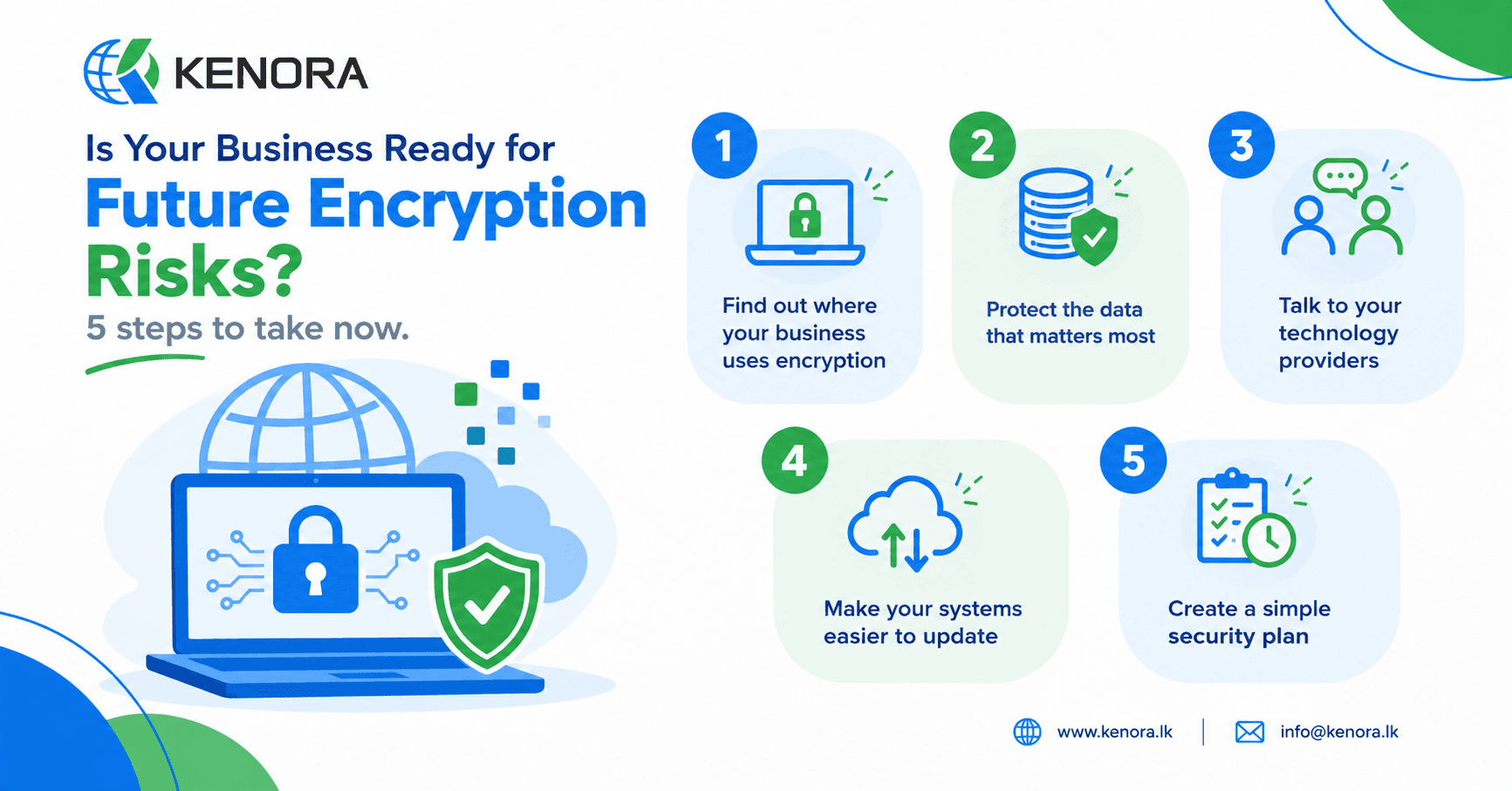
Is Your Business Ready for Future Encryption Risks? 5 Steps to Take Now
Picture this. Someone steals an encrypted file from your business today. They can't open it, so they just keep it. Years later, computers become powerful enough to unlock it.
It sounds like a movie plot, but security experts take this idea very seriously.
Quantum computing gets better every year. Once it is strong enough, it could break some of the encryption we rely on today. That does not mean a quantum computer will hack your business tomorrow. It does mean it is smart to start planning now.
In October 2026, the US National Institute of Standards and Technology (NIST) released a report to help organizations move to quantum-resistant security. So what should a business actually do? Here are five simple steps.
Why Is Future Encryption a Concern?
Encryption scrambles information so that only someone with the right key can read it. Your business probably uses it all the time to protect customer records, online payments, emails, and shared files.
Today, this works well. The worry is about the future. Powerful quantum computers could one day crack some of the methods we use right now.
There is even a name for the risk: "harvest now, decrypt later." Attackers steal encrypted data today and store it, hoping to unlock it when technology catches up. Think about medical records or business secrets. They can stay valuable for many years.
Think of it like changing the locks on a building. You would not do it overnight, but you would want a plan before the old locks stop working.
You do not need to panic. But the sooner you understand your risks, the more time you have to deal with them calmly.
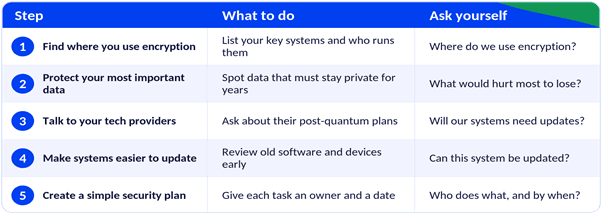
Here is the whole plan at a glance:
1. Find Out Where Your Business Uses Encryption
You can't protect what you can't see. So start by finding out which systems use encryption.
Chances are it is in more places than you think: your website, cloud tools, email, databases, company apps, and secure network connections. Some of these are run by your own IT team. Others are handled by software vendors or cloud providers.
Make a list of your most important systems. A simple spreadsheet is enough. Then ask these questions about each one:
- What sensitive information does it store?
- How is that information protected?
- Who looks after the security?
- Can the system be updated when new standards arrive?
You do not need to understand every technical detail yet. The goal is simple: know where encryption lives, so you know what might need attention later.
2. Protect the Data That Matters Most
Not all data carries the same risk. A temporary file may not matter in a year. But financial records, health information, customer details, and company research may need to stay private for a very long time.
Here is a simple test. Imagine someone gets hold of this data ten years from now. What would happen? A lunch menu from last week is no problem. Patient records or product designs are a very different story.
Pick out your most sensitive data and decide how long it needs to stay secret. Then check where it is stored, who can reach it, and whether your current protection is good enough.
This keeps you focused. Instead of trying to fix everything at once, you start with what would hurt the most to lose.
3. Talk to Your Technology Providers
Most businesses rely on outside companies for software, cloud services, and security tools. So even if your own setup is solid, you also depend on what those companies do.
Reach out and ask whether they have a plan for post-quantum cryptography (PQC). This simply means encryption methods built to stand up to both today's computers and future quantum computers.
Good questions to ask:
- Are your products getting ready to support post-quantum standards?
- Will our current systems need updates?
- Could these changes affect our applications?
- How will you test them?
You do not need every answer right away. What matters is knowing their plans. If a provider has no answer yet, that is useful to know too. One short conversation now can save you from nasty surprises later.
4. Make Your Systems Easier to Update
Many businesses still run old software, custom-built apps, or equipment that is hard to update. These can turn into a headache when new security standards arrive.
For example, an old app might rely on an outdated security library. A device might no longer get updates. A business system might depend on software that cannot support newer security methods.
Look at these systems before they become emergencies. When you build new software, ask developers to think about future security changes from day one. When you buy new technology, check that the provider has a clear update plan. And always test big security changes before they go live.
You do not have to replace everything today. The aim is to make future updates easier, safer, and cheaper.
5. Create a Simple Security Plan
Preparing for this is not a one-time job. A simple written plan keeps everyone on track.
List the systems you need to review, the risks you found, and the actions your team should take. Give every task an owner and a due date. Start with systems that hold highly sensitive data or would be hard to replace.
Your plan can include:
- Reviewing encryption across your important systems
- Contacting your software and cloud providers
- Updating old or unsupported technology
- Testing new security methods
- Checking your progress on a regular basis
Also keep an eye on trusted guidance. NIST published its first post-quantum encryption standards back in August 2024. Its October 2026 report, Transition to Post-Quantum Cryptography Standards, gives a roadmap for moving away from encryption methods that quantum computers could break. The timelines are aimed mainly at US federal systems, but the ideas are useful for any business planning ahead.
Do Businesses Need to Change Everything Now?
No. The smart move is to understand what you have and plan changes step by step.
Some businesses will need to review custom software and older equipment. Others will find that their providers handle the updates for them.
How much you need to do depends on the data you protect, the systems you use, and how long that data must stay safe.
Try not to make rushed choices because of scary quantum headlines. Work with trusted technology and security experts to decide what comes first. Starting early gives you time to test changes, manage costs, and avoid disruption.
Final Thoughts
Future encryption risks might feel far away, but preparing starts today. Know your systems, protect your sensitive data, talk to your providers, and plan for updates.
You do not need to solve everything at once. Review your current security, spot the biggest risks, and build a clear plan for what comes next.
The best time to prepare for a security change is before it becomes an emergency.
At Kenora, we believe good technology starts with good planning. Reviewing your software, data protection, and IT systems today can help your business stay ready for whatever comes next.