
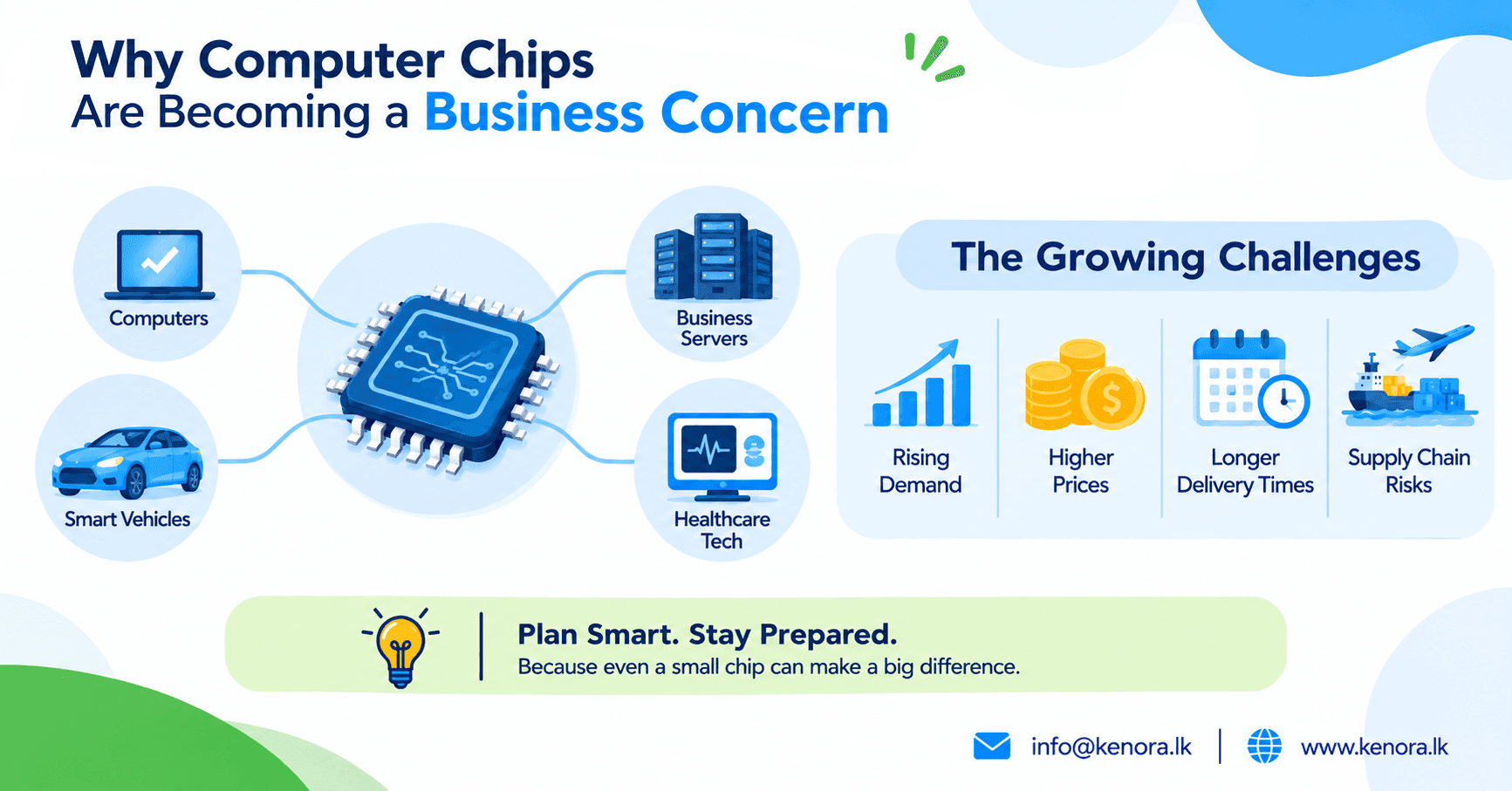
Why Computer Chips Are Becoming a Business Concern
When we think about computer chips, we usually think about laptops, phones, and game consoles. But these tiny parts matter much more to business than most people realize.
From office servers to hospital equipment, chips keep modern companies running. They process data, power online services, and connect the systems we use every day.
Right now, the demand for powerful computing is growing fast. That puts pressure on chip supply and pushes prices up. Even if your business has nothing to do with making computers, you may still feel it.
So why should a business care about something so small?
Computer Chips Are Behind Everyday Business
Computer chips are tiny electronic parts. They help devices process information, store data, and do specific jobs.
Your phone uses chips to run apps. A company’s servers use them to manage records. Modern cars use them for many things, from engine control to driver assistance.
Take a hospital as an example. Its computers, patient monitors, and other digital equipment all depend on electronic parts. If key equipment gets more expensive or harder to replace, the hospital may need to change its technology budget.
Shops, factories, delivery companies, and offices can face the same problem.
Almost every business that uses digital technology also depends on computer chips.
Why Is Demand Growing?
The main reason is artificial intelligence, or AI.
AI systems need powerful computers to process data, learn from it, and answer users. These computers need advanced processors and a lot of memory.
Tech companies are spending heavily on data centers to support AI. Because of this, demand for some chips, especially memory chips, has gone up fast.
The problem is that chips take time to make. New factories must be built, special equipment must be installed, and production must slowly grow. None of this happens overnight. When demand grows faster than supply, prices go up and deliveries get slower.
Deloitte’s 2026 analysis shows how serious this has become. AI demand has pushed memory chip prices to very high levels, and the tight supply could last until 2029 or even 2030. The effects can also reach everyday computers, phones, and other devices, not only big data centers.
This means your business may face higher technology costs, even if you never plan to use advanced AI.
How Can a Small Chip Delay a Big Project?
Picture a company that wants to upgrade its servers. The team has chosen the equipment, set the budget, and planned the installation. Everything is ready, except for one part that the supplier cannot deliver on time.
Now the whole project has to wait.
This is a common problem with electronic equipment. A device is made of many parts, but one missing part can hold up the entire product.
For a business, this can mean:
- Waiting longer to upgrade important systems
- Paying more for computers or servers
- Using old equipment for longer
- Delaying new services or tech projects
- Spending extra time looking for other suppliers
Sometimes the equipment is available, but the price is much higher than planned. For a small business with a small IT budget, even a modest rise can affect other plans.
Why Chip Prices Matter to Ordinary Businesses
Higher chip prices do not only hurt big tech companies. When parts cost more, manufacturers often pass some of that cost on to customers. Laptops, servers, storage devices, and network equipment can all become more expensive.
Say a growing company needs to replace 30 office computers. If each computer costs more, the total bill can grow very fast. The company may have to delay some purchases, cut other spending, or look for better value.
Bigger companies face the same issue on a larger scale. They may need to buy equipment for several offices, factories, or data centers at the same time.
The lesson is simple. Your technology budget should include changing hardware prices, not just software licenses and service fees.
The Hidden Risk Is the Supply Chain
Chips do not come from one factory. Making them depends on a global network of manufacturers, equipment makers, and material suppliers. Different steps happen in different countries, so there are many places where delays can start.
For example, a problem at a material supplier can slow down chip production. That slows down the company that builds servers. Then the delivery to the business that ordered them is late. That business may never know where the problem began.
This is why you should look beyond price. Supplier reliability, delivery times, and backup options matter too.
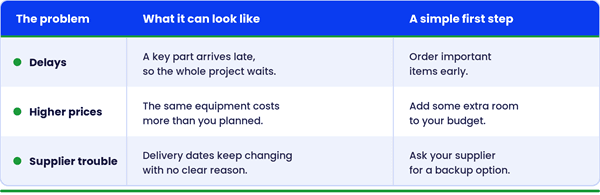
You do not need to understand every step of chip making. But you should know which purchases are essential and where a delay would cause serious trouble. Here is a quick view of the main risks:
What Can Businesses Do?
No company can control the global chip market. But you can make smarter choices to reduce the impact of shortages and higher prices.
1. Plan purchases early
If you expect to replace computers or servers next year, start looking at your needs now. This gives your team more time to compare prices, check stock, and avoid rushed decisions.
2. Review the equipment you have
Not every device needs to be replaced right away. Regular maintenance and sensible upgrades can help you get more value from what you already own. But do not keep old systems if they create serious security or reliability risks.
3. Consider suitable alternatives
If one device is too expensive or hard to get, another option may do the same job. Check performance, compatibility, support, and long term costs before you decide.
4. Talk to your suppliers
Ask about delivery times, price changes, and other products they can offer. For important projects, a backup option can save you from unexpected delays.
5. Set clear priorities
Not every upgrade is equally important. Start with the equipment and systems that affect security, daily work, and customer service.
Good planning helps you spend your budget where it matters most.
Technology Planning Is Business Planning
Computer chips are small, but their effect on business can be big.
A shortage can delay a project. Higher prices can stretch an IT budget. A supply chain problem can disrupt services that customers use every day.
As demand for AI, connected devices, and digital services keeps growing, businesses need to think carefully about the hardware behind their technology.
This does not mean buying everything in advance or replacing every system before prices rise. It means knowing what your business needs, planning important purchases, and getting ready for possible changes.
The right decisions can help you avoid extra costs and keep important systems running smoothly.
Final Thoughts
Computer chips are no longer only a concern for hardware makers. They are now part of everyday business planning.
Even companies that do not sell technology need these parts to run their daily work. When chip supply gets tight or prices rise, the effects can spread far beyond the tech industry.
You do not need to become a chip expert to prepare. You only need to understand how your systems depend on hardware, and plan your technology spending with care.
At Kenora, we believe good technology decisions start with understanding real business needs. Whether a company is improving its software, upgrading its IT systems, or planning for growth, looking at the bigger picture helps it make smarter choices.
In a world that runs on digital technology, even the smallest part can make a big difference.